The Four Ball Tester (FBT-3) provides a fast, repeatable and accurate way to test lubricants for their wear preventive (WP), extreme pressure (EP) and frictional properties. With high levels of automation, the FBT-3 makes these tests easy to run. Four Ball Tester (FBT-3) can provide precise results, complying with the most demanding test standards such as:
|
WP (wear-preventive)
|
EP (extreme-pressure)
|
|
ASTM D2266
ASTM D4172
DIN 51350-1
DIN 51350-3
DIN 51350-5
IP 239
ISO 20623:2017
|
ASTM D2783
ASTM D2596
ASTM D5183
DIN 51350-2
DIN 51350-4
IP 239
ISO 20623:2017
|
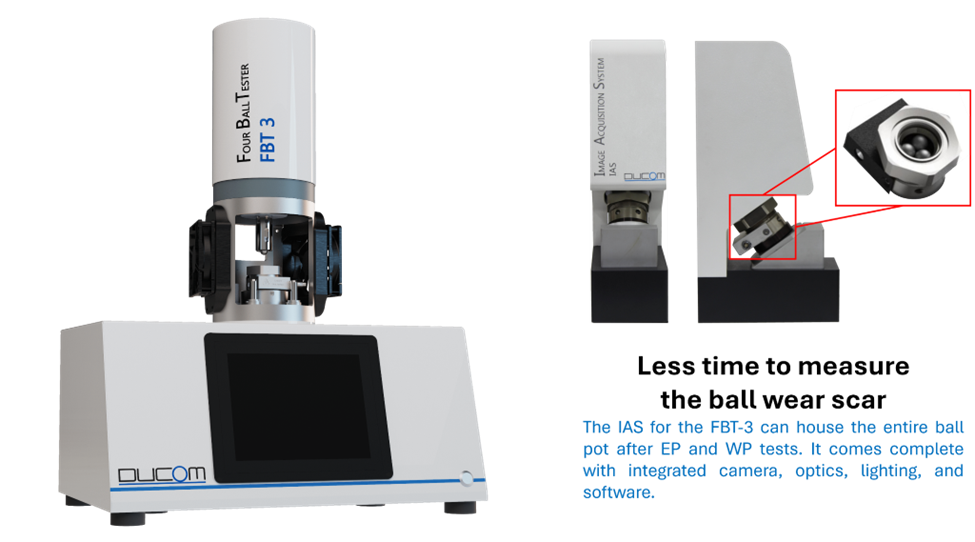
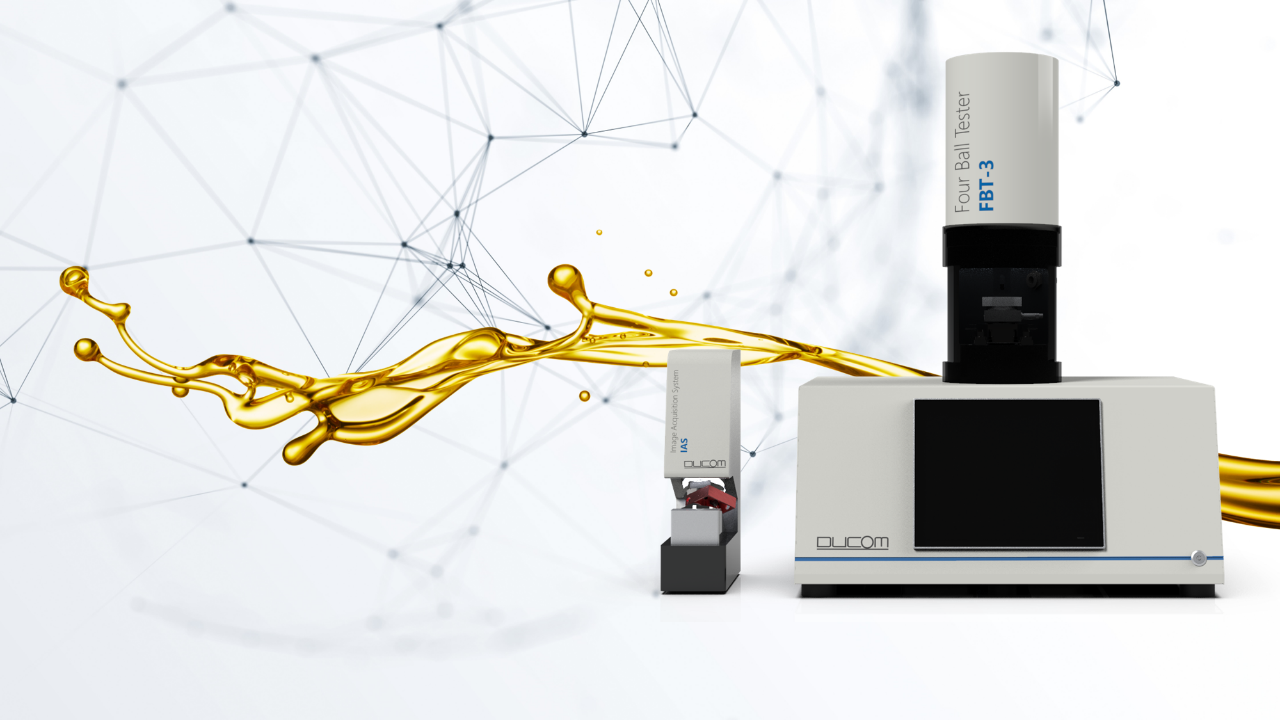
Ducom Four Ball Tester (FBT-3) with dedicated Image Acquisition System (IAS).
A clear step-by-step guide and a few clicks: this is all you need to set-up an EP test with our FBT-3.
Test name / Standard: Extreme Pressure testing of lubricants with FBT-3 testing (ASTM D2783 for oils, ASTM D2596 for greases)
Aim of the test: Primarily used to evaluate extreme pressure properties for high-load applications. The outputs to quantify are:
- Weld point
- Load-wear index (LWI)
- Last non-seizure load
/FBT-3%20Images%20and%20Videos/Welded%20Balls.jpg?width=118&height=116&name=Welded%20Balls.jpg) If you’re interested in better understanding the EP test specifications, take a look at this content about WP and EP Tests Standards Comparison.
If you’re interested in better understanding the EP test specifications, take a look at this content about WP and EP Tests Standards Comparison.
With FBT-3, automation is at its highest. Just 5 clicks to know how effective your lubricant is. All the most used test standards are implemented in the instrument and an automatic pneumatic loading system allow you to easily conduct tests
at loads from 50 to 10,000 N.
FBT-3 is equipped with intelligent sensors to control and monitor the test and provide diagnostics to the instrument state of health.
Test procedure:

- The first step includes proper cleaning of the balls and ball pot followed by sample preparation. The procedure for oils and greases differs; oil is poured into an empty ball pot with the locked balls whereas grease is packed with a spatula into the ball pot before placing the balls, removing air pockets and locking. (Note - It Is important to use tightening torque of 68 ± 7 Nm to get accurate weld load values).
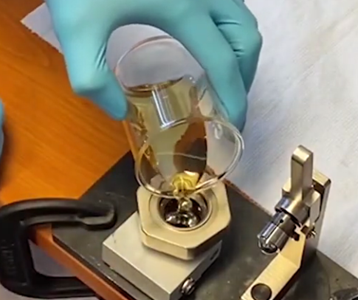
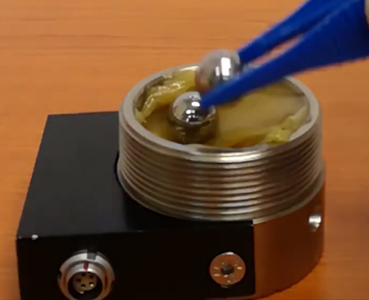
Oil poured into empty ball pot (left) and balls poured into grease filled ball pot (right).
Click here for a detailed setup video (FBT-3 grease test)
- Turn on the instrument and open the WinDucom
- Select New Test to select the desired test among the implemented standards.
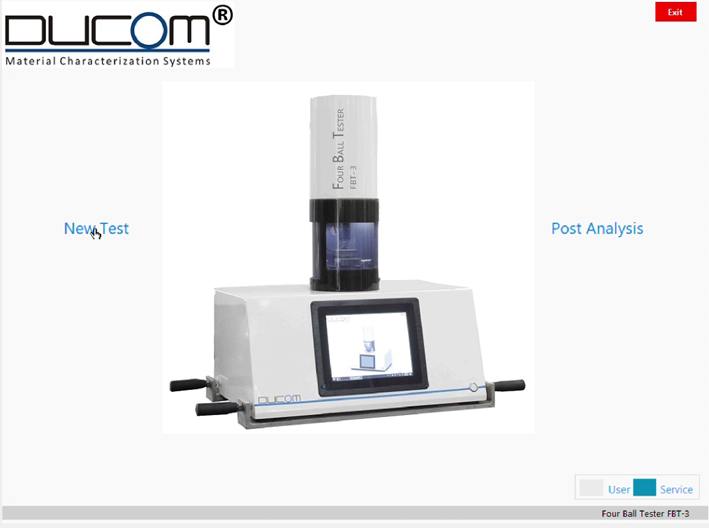
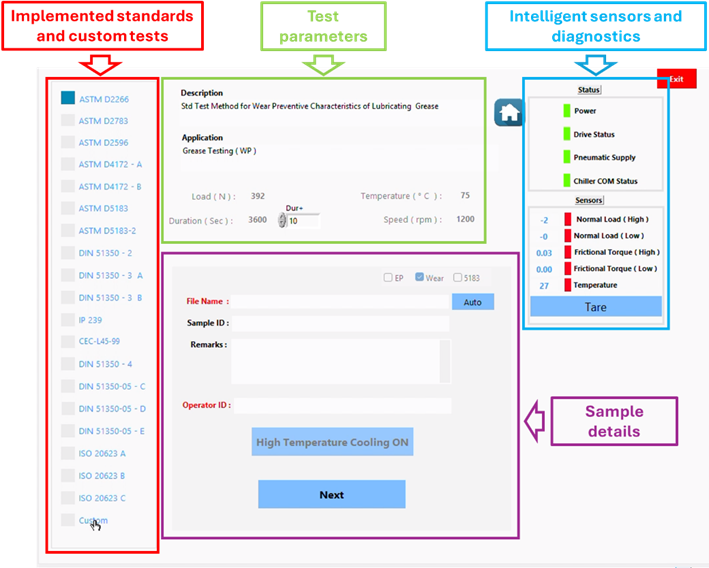
- In the further test set-up screen, the operator will be intuitively able to:
- select the desired standard (i.e., for EP tests ASTM D2783 and ASTM D2596 can be selected for oils and greases respectively) and the parameters customized whenever the standards allow it (red and green areas, respectively).
- monitor the state of health of the instrument and check if the different sensors are working properly (light blue area). Please note that the red led for the sensors is not related to the functioning of the related sensor.
- Put File Name and Operator ID mandatory to start the test and record the data (see purple area) and, to enhance data management, indicate Sample ID and Remarks (not mandatory)
- A click on Tare (light blue area) to assign a reference value to the sensors and Next to go through the test screen.
- Clicking on Run Test, the instrument will start applying the load and reaching the test temperature by heating or cooling the test area. When both applied load and temperature will correspond to the standard values, the test will start. In the same screen you can monitor all the most important outputs to check that the test is being correctly carried out. Normal Load (N), Frictional Torque (Nm), Temperature (°C) and Speed (rpm).
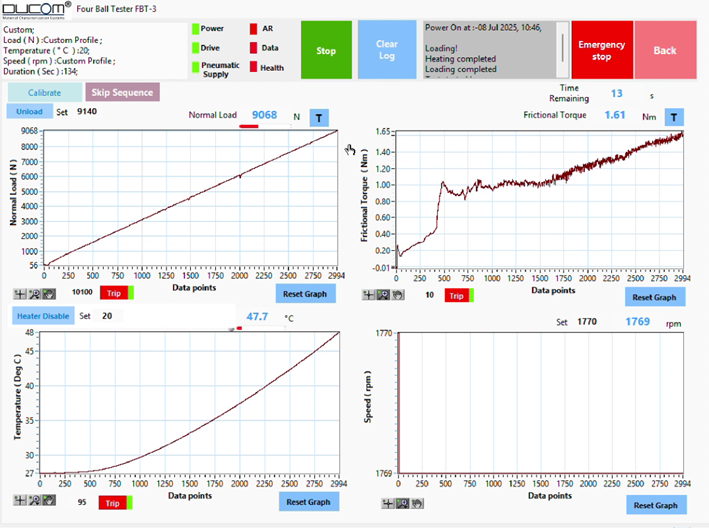
Live data monitoring: precision sensors also allow measurement of temperature of the lubricant, the applied load and the rotational speed values during the test to ensure the complying of the standard along the whole test.
- At the end of the EP test, the ball-pot and the ball-chuck must be removed.
- If no seizure has occurred, the MWSD on the three balls on the bottom must be measured through a microscope and Image Acquisition System, The PC embedded in the FBT-3 elaborates the images using the ScarView dedicated software). If friction torque does not exceed 10 Nm at the highest load, a wear scar exceeding 4 mm in MWSD can be considered as welded.
- If seizure has occurred, the applied normal load can be considered as weld load. The machine automatically detects seizure and stops the test when friction torque exceeds 10 Nm.
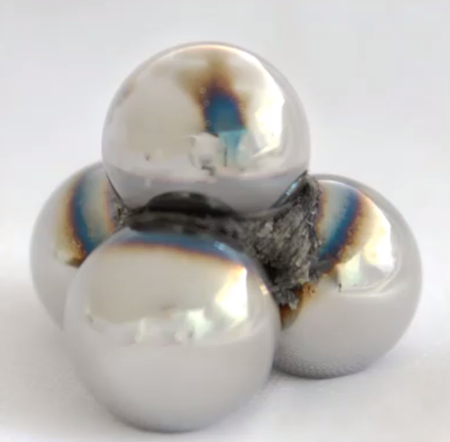
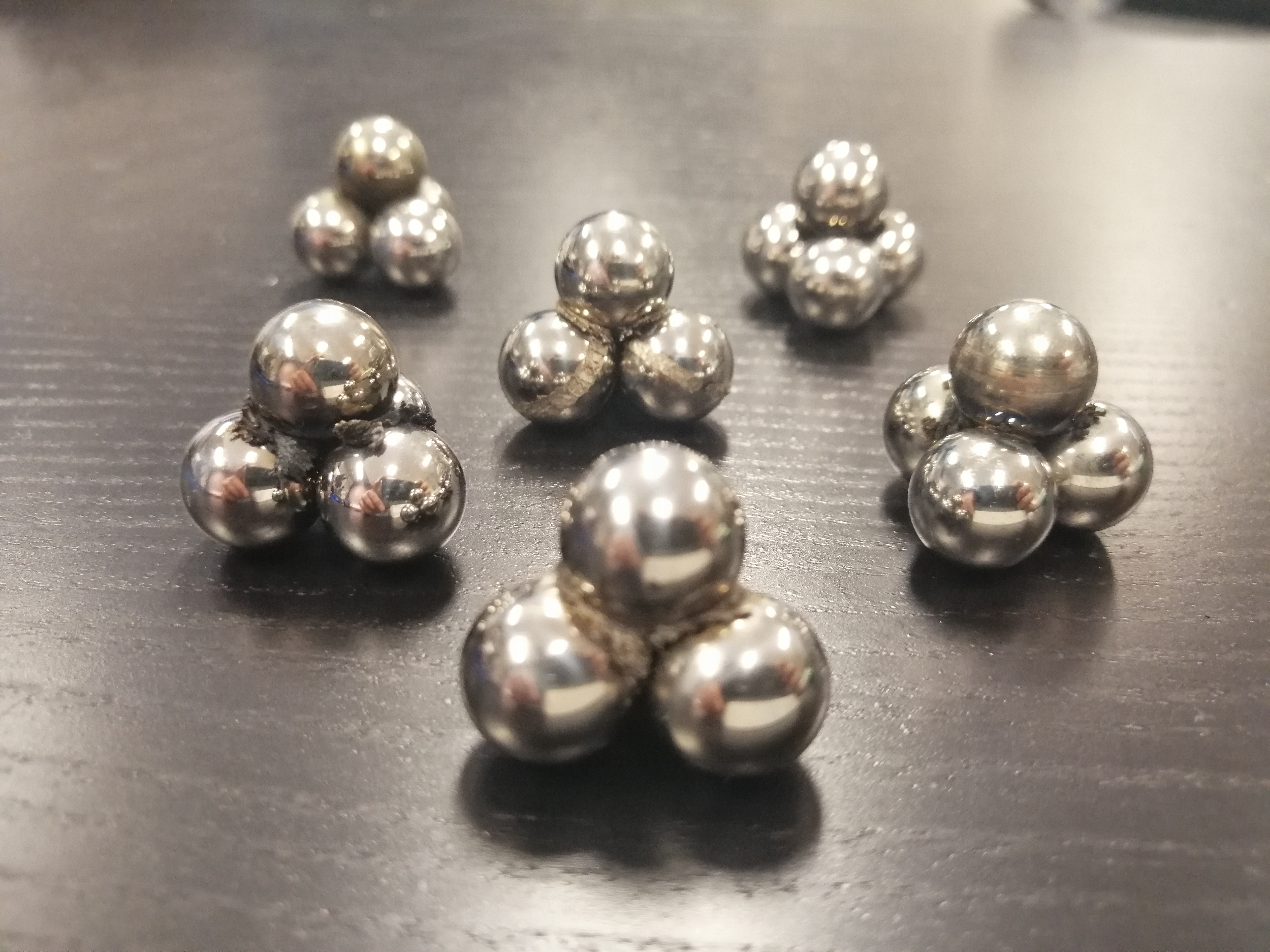
Image of welded balls with the corresponding load being weld load
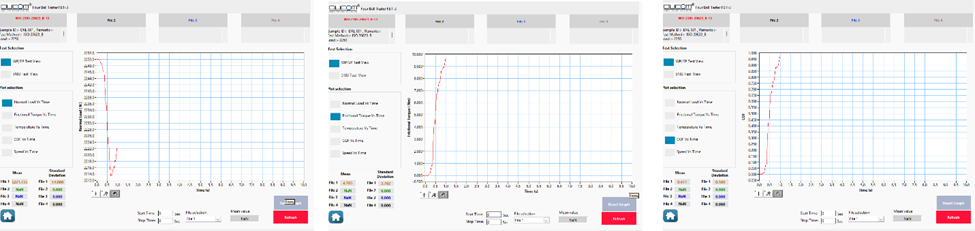
Normal load, friction torque and CoF plots at weld load
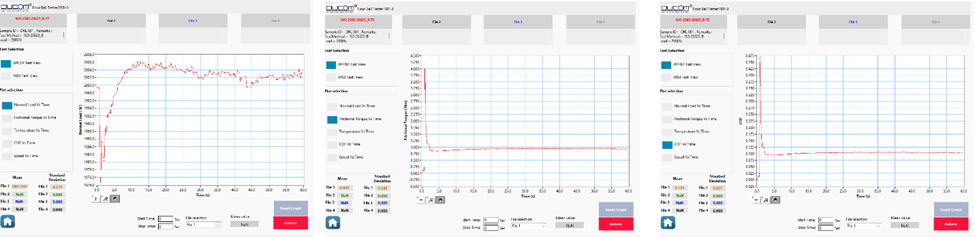
Normal load, friction torque and CoF plots at weld load
- At the end of each test, the data can be accessed by opening the .dfb file automatically generated by the instrument and containing the values collected at each acquisition during the test.
%20-%20PNG.png?width=925&height=246&name=Ducom%20-%20Logo%20-%20Full%20-%20Vector%20(90%20Gray%20and%20Light%20Blue-Inverted)%20-%20PNG.png "Ducom - Logo - Full - Vector (90 Gray and Light Blue-Inverted) - PNG")



.png?width=564&height=150&name=Ducom%20-%20Logo%20-%20Full%20-%20Vector%20(90%20Gray%20and%20Light%20Blue-Inverted).png "Ducom - Logo - Full - Vector (90 Gray and Light Blue-Inverted)")
%20-%20Touch%20Interface.gif)